


Why Domain Renewal Prices Are Higher Than the First Year (and How to Stop Overpaying)
You find a domain for $1.99, buy it in two minutes and feel pretty good about it. Twelve months later the renewal email lands, and the price is $18.99. Nothing about the domain changed. So what happened?
This is one of the most common surprises people have with domains, and it is the main reason we built this site. Below we explain why it happens and how to avoid paying more than you need to.
The short answer
The first-year price is a promotion. Registrars sell the first year cheaply, sometimes at a loss, to win you as a customer. They make their money back from renewals, because most people never move their domain once their website and email are set up on it.
The renewal price is the domain's real, ongoing price. That is the number that matters if you plan to keep the domain for more than a year.
Why registrars do this
Moving is a hassle. Transferring a domain takes a few steps and a few days, so most people just pay the renewal.
The headline price wins the click. In search results and ads, "$0.99 .com" gets attention. "$11.81 .com, same price every year" sounds less exciting, even though it is often the better deal.
Add-ons. Cheap domains are often the start of a checkout full of extras: hosting, email, SSL and privacy. Some are useful, many are not.
A real example: .com
Here is what four registrars charged for a .com when we checked prices in November 2026:
Registrar | First year | Renewal |
|---|---|---|
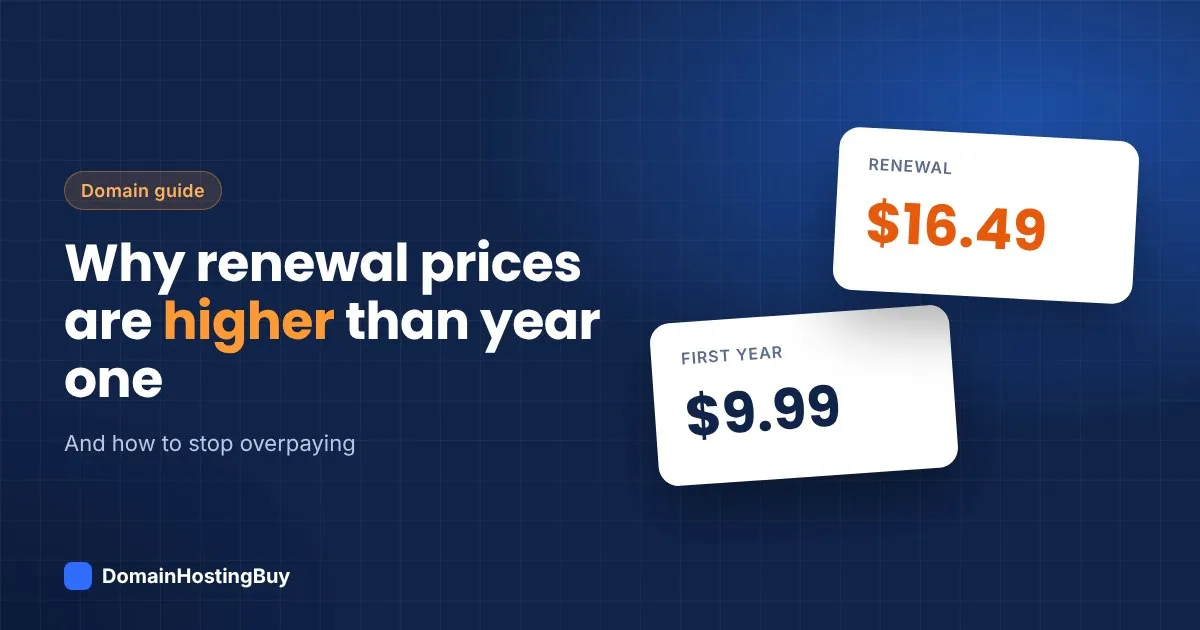
OVHcloud | $9.99 | $16.49 |
Porkbun | $11.81 | $11.81 |
Name.com | $14.41 | $22.65 |
NameSilo | $19.99 | $19.99 |
OVHcloud is cheapest for the first year. But if you keep the domain for five years, Porkbun works out to about $59 in total, while OVHcloud comes to about $76. The registrar that looked $1.82 more expensive on day one saves you around $17 over five years.
Prices change often, so always check the live .com price table before you buy.
How to work out the real cost
Use this quick formula before you buy any domain:
Total cost = first-year price + (renewal price × number of extra years)
If you plan to keep a domain for three years, compare the three-year totals, not the first-year prices. It takes a minute and is the most reliable way to avoid a nasty surprise.
Five ways to avoid overpaying
Look at the renewal price first. Every price table on this site shows the renewal next to the first-year price, along with the date we checked it.
Check what is included. Free WHOIS privacy and free DNS can make a slightly more expensive registrar the better deal.
Be careful with long first terms. Some registrars only offer the low price if you pay for several years at once. Check the price per year.
Transfer when renewals jump. If your current registrar raises the renewal price, you can move the domain. A transfer for .com and most other generic extensions adds a year to your registration, so you are not paying for nothing. Our step-by-step transfer guide shows how.
Turn on auto-renew, but check it. Auto-renew protects you from losing the domain. Just make sure you know what price it will renew at.
Is a cheap first year ever the right choice?
Yes. If you are testing an idea, building a short campaign site, or you are not sure you will keep the domain, a cheap first year is fine. Just decide before the renewal date whether you want to keep it.
For a business name, a personal brand or anything you plan to keep, choose the registrar with a low and steady renewal price.
Frequently asked questions
Can I lock in today's renewal price?
Partly. Registering or renewing for several years at once fixes the price for those years. After that, the registrar's current price applies.
Why did my renewal price go up even though I didn't change anything?
Registries, the organisations that run each extension, sometimes raise their wholesale prices, and registrars pass the increase on. Registrars can also change their own prices at any time.
Is the ICANN fee included in the prices on this site?
We show the price as the registrar lists it. Some registrars add the small ICANN fee at checkout. See how we compare prices for details.
Bottom line: the first-year price gets you in the door, but the renewal price is what you pay for years. Compare both, and you will rarely overpay. Compare domain prices across registrars.