


Why Is Domain Renewal More Expensive Than Registration?
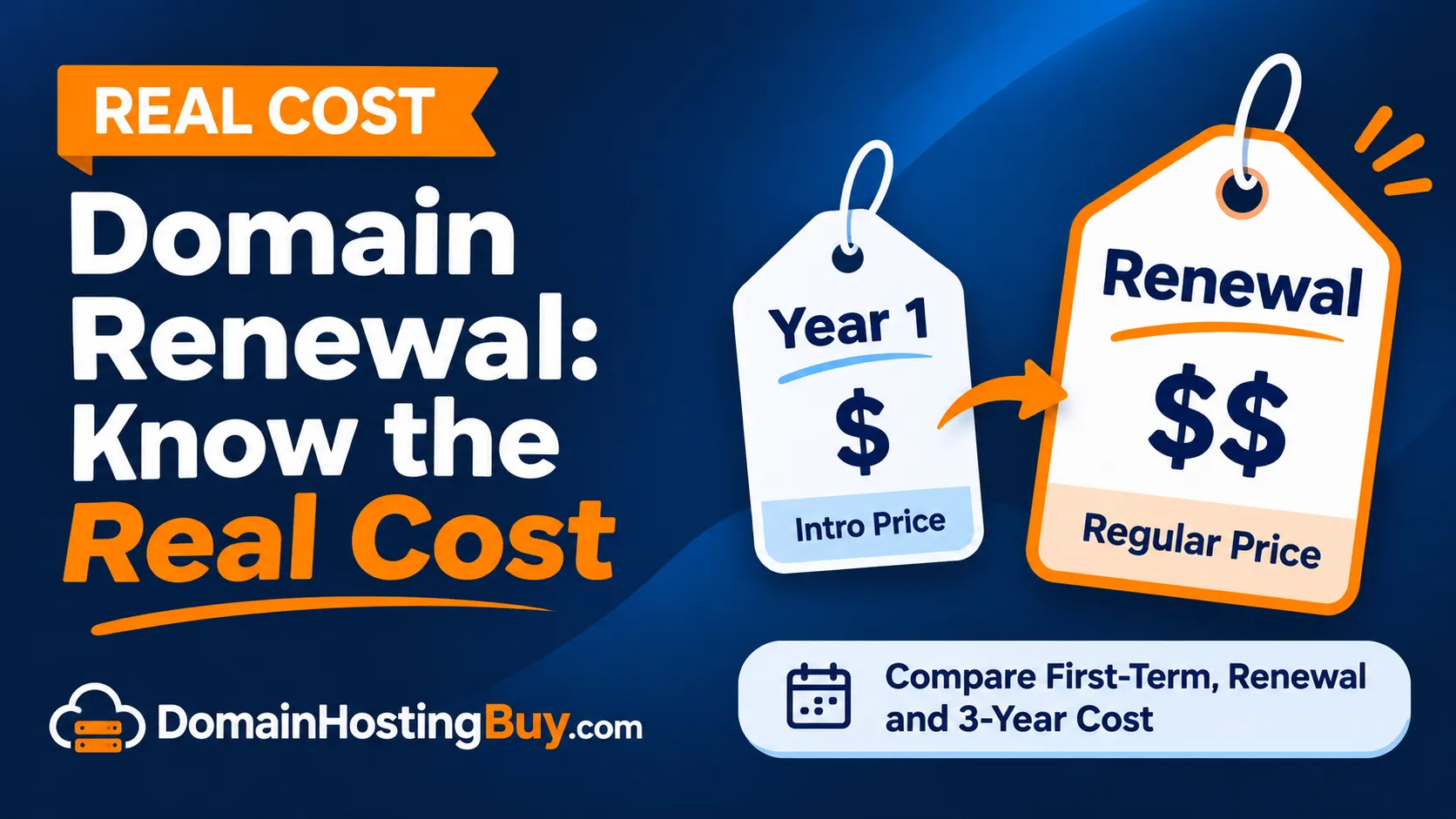
Domain renewal is often more expensive than initial registration because many registrars offer promotional prices to attract new customers. Once the first registration period ends, the domain usually renews at the registrar's standard renewal rate.
This means the cheapest domain registration deal may not be the cheapest option if you plan to keep your domain for several years. Before registering a domain, compare its first-term price, renewal price and total long-term cost.
Quick answer: Domain renewal costs more because introductory discounts may apply only to the first registration term. Always compare renewal prices before choosing a registrar.
What we checked: This guide explains how domain registration and renewal pricing work, using ICANN's published registrant guidance and DomainHostingBuy.com's domain pricing comparison approach. No fixed provider prices are quoted because domain prices can change. Check the live comparison tables for current prices.
1. Why Are Domain Registration Prices So Cheap?
Many domain registrars use introductory pricing to attract new customers. A registrar may offer a lower first-term price as a promotion, while the renewal price follows its regular pricing structure.
This is a common pricing practice across subscription-based products and services. Domain registration is no exception.
For example, you might find a domain advertised at a low introductory price. However, that offer may apply only to the first registration term. When the domain expires, you may need to pay the registrar's regular renewal price to keep using it.
The important point is that the first-year price does not always represent the long-term cost of owning a domain.
2. What Is the Difference Between Domain Registration and Renewal?
Domain registration is the process of registering an available domain name through a registrar. You pay for a registration period, which is typically between one and ten years for many generic domain extensions.
Domain renewal extends your registration period so you can continue using the domain after its current term ends.
Although registration and renewal both keep a domain registered, their prices may be different.
Registration price: The amount charged when you register a new domain.
Renewal price: The amount charged to extend an existing domain registration.
Transfer price: The amount charged when transferring a domain to another registrar. Depending on the extension and terms, a transfer may include an additional registration year.
Before purchasing, check all three prices where applicable. You can compare current domain registration and renewal prices on DomainHostingBuy.
3. Why Do Different Registrars Charge Different Renewal Prices?
Not every registrar uses the same pricing structure. Each provider may have different retail pricing, promotional policies, operating costs and additional service offerings.
Several factors can affect the renewal price:
Promotional pricing
Some registrars offer discounts for first-time registrations. These promotions may not apply when you renew the domain.
Registrar pricing policies
Registrars set their own retail prices and terms. Two providers may charge different amounts to register or renew the same domain extension.
Domain extension
Renewal prices vary by extension. A .com domain and an .io domain, for example, can have very different registration and renewal costs.
Additional services
Some registrars offer optional services alongside domain registration, such as email, hosting or website-related products. Check your order carefully to understand which services are included and which may involve separate charges.
According to ICANN's domain renewal guidance, registrars set their own prices, terms and conditions. ICANN also advises registrants to review renewal pricing before registering a domain.
4. Why Should You Compare the Three-Year Domain Cost?
Comparing only the first-year registration price can give you an incomplete picture. If you intend to keep a domain for several years, renewal pricing becomes an important part of your decision.
A simple way to compare the cost of keeping a domain for three years is:
Three-year domain cost = First-term price + (2 × Annual renewal price)
This calculation assumes an initial one-year registration followed by two one-year renewals. If you register for multiple years initially, use the actual term price and remaining renewal periods instead.
For example, consider two registrars offering the same domain extension. Registrar A has a lower introductory price but a higher renewal rate. Registrar B has a higher introductory price but a lower renewal rate.
Registrar A may look cheaper at checkout, but Registrar B could cost less over three years. The only way to know is to compare both the initial and renewal prices.
Use the DomainHostingBuy domain comparison table to check current prices rather than relying on old promotional offers.
5. How Can You Avoid Expensive Domain Renewals?
You do not have to choose a registrar based only on its introductory offer. A few checks before registration can help you avoid unexpected renewal costs.
Check the renewal price before buying
Look for the regular renewal rate on the registrar's website. Do not assume that the promotional registration price will continue in future years.
Compare multiple registrars
Compare providers offering the same domain extension. Check first-term pricing, renewal pricing and any relevant transfer fees.
Review the full checkout price
Check whether optional services have been added to your order. Domain privacy, email and other services may have separate pricing or renewal terms.
Keep track of your expiration date
Set a reminder before your domain expires. Renewing on time can help you avoid the additional costs and complications that may apply after expiration.
Consider transferring your domain
If your current registrar has a high renewal price, you may want to compare transfer options from other providers. Review transfer eligibility, costs and terms before making a decision.
Read our guide on how to transfer a domain to a cheaper registrar before starting the process.
6. Is the Cheapest First-Year Domain Always the Best Choice?
No. A low introductory price does not necessarily mean a domain is affordable over the long term.
If you are registering a domain for a business, online store, blog or long-term project, renewal pricing deserves the same attention as the initial registration price.
Consider these simple rules:
If you plan to keep a domain for several years, compare its long-term cost.
If you are choosing between registrars, check both registration and renewal prices.
If you are registering multiple domains, calculate the combined renewal costs.
If a promotional offer looks unusually attractive, read its terms carefully.
The right registrar is not necessarily the one with the lowest first-year price. It is the one whose overall pricing and services suit your needs.
How DomainHostingBuy Helps You Compare Renewal Prices
DomainHostingBuy helps you compare domain registration and renewal prices across multiple registrars.
Instead of focusing only on introductory offers, our comparison approach considers the first-term price, renewal price and three-year cost. This makes it easier to understand what you may pay after the first year.
Domain prices are retrieved through provider APIs and updated regularly. Therefore, we avoid relying on static price lists that may become outdated.
You can also learn more about how DomainHostingBuy compares domain prices and how the comparison process works.
Frequently asked questions
Why is domain renewal more expensive than the first year?
Many registrars offer introductory discounts to attract new customers. These discounts may apply only to the first registration term. When you renew, the registrar may charge its regular renewal rate. This is why you should always check the renewal price before purchasing a domain.
Can I renew my domain with a different registrar?
You can generally transfer an eligible domain to another registrar rather than renewing it with your current provider. However, transfer rules, eligibility requirements and fees vary. Check the new registrar's transfer pricing and terms before starting. You should also make sure your domain is not subject to a transfer restriction.
Does domain renewal price stay the same every year?
Not necessarily. Registrars can change their pricing and terms. Renewal costs may also be affected by changes in registry pricing or applicable fees. Check the current renewal rate and the registrar's terms rather than assuming that today's price will remain unchanged in future years.
How can I find the cheapest domain renewal price?
Compare renewal prices for the same domain extension across multiple registrars. Do not compare one provider's introductory registration offer with another provider's regular renewal rate. Use a comparison table that shows both prices so you can understand the long-term cost.
Is domain transfer cheaper than domain renewal?
It depends on the registrar, domain extension and transfer terms. Some transfers include an additional registration year, while the cost varies between providers. Compare the transfer fee and the renewal price before deciding. Also check whether your domain is eligible for transfer.
What happens if I do not renew my domain on time?
Your domain may expire, and its website or email services may stop working. Depending on the extension and registrar, you may have an opportunity to renew or restore it, sometimes with an additional fee. Read what happens when a domain expires to understand the process.
Before registering a domain, compare its first-term and renewal prices rather than choosing only the cheapest introductory offer. Compare current .com domain prices on DomainHostingBuy to understand the real cost beyond the first year.